Posts

Inviting Kindergarten to Write

Image
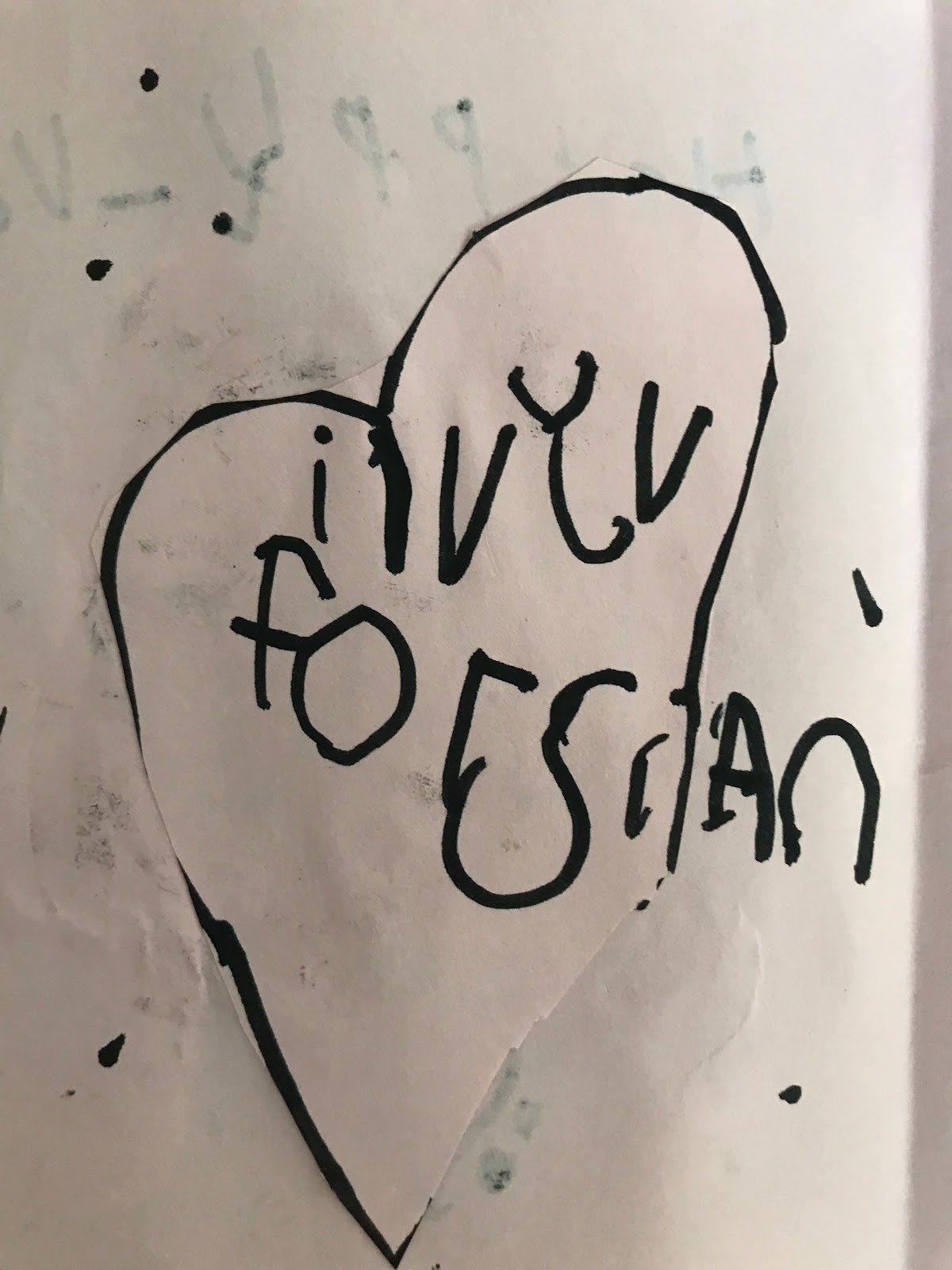
This post is about seeking opportunities to engage Kindergarten children as writers and invite them to write in a range of meaningful ways for different purposes and audiences. Authenticity is key. Authentic contexts arise from observing children as they play and building strong relationships with them to learn more about their interests. Below are some playful ways I have introduced intentionally to help children develop their identities as writers.  Dramatic play We have a cuddly toy for the class called Tidy. Tidy has written to the children and invited them to reply and post their ideas in a post box that is in the classroom.  After exploring the local neighbourhood, the children were invited to think about role play scenarios they might like to explore. Several children created shops, and one child created a dessert menu.  Special events We have a range of real cards for events such as birthdays, new year, and Valentine's. These cards model the structure of different...
Mind Mapping Playful Literacies

Image
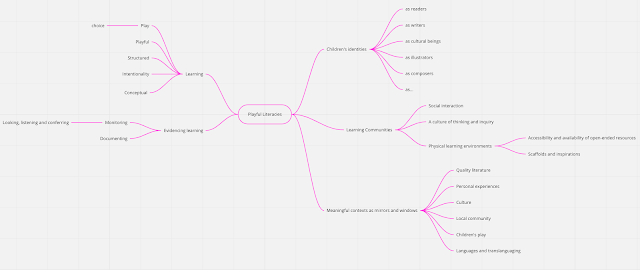
This blog is about me as a learner. Last week, I viewed a webinar led by Diane Kashin on mind mapping. I am also currently mid-way through a 4-week course on playful literacies facilitated by Jo Fahey. I was struck by what I was learning, how I was learning and the role of the facilitator.  Diane described mind maps as documents that make learning visible. Before using mind maps as pedagogical documentation, I wanted to play with mind mapping myself and decided to map the big ideas of the playful literacies course. I used Miro, a free online platform, to map the big ideas. The structure of a mind map allowed me to identify, reflect on and refine the big ideas themselves and the connections I was making.  There is a great flexibility to this tool and I look forward to making new connections and adding to the mind map in the next two weeks. I also plan to use mind mapping using visuals with Kindergarten. I am also interested in playing with this way to plan responsively and mean...

Action in the Early Years

Image
In the recent IB document: The Early Years in the PYP, many aspects of the programme are contextualised and unpacked specifically for early years. This includes the notion of action. Even for 3-6 year olds, action can look and sound so different and could take place in or beyond time in the learning environments in school.  Quoting from the document (page 20): Student-initiated action occurs in response to experiences that are personally meaningful to learners, demonstrating that they have linked their learning to real-life issues and opportunities. The action may be short-term or it could be ongoing.  The document has some very helpful categories of what action might involve and examples of what these categories might look like. This blog is a chance for me to use the same categories and find examples of Kindergarten this year taking this type of action.  Helping self or others Children are very kind to other children. Some children have difficulties to put on and fold a...

Key Concepts

Image
Conceptual learning continues to motivate and interest me. Personally, I am much more excited by the power of related concepts, but key concepts do have an important role. This post is about how they might be used in Kindergarten.  Concepts share common criteria. Like the idea of white light, concepts can be viewed and described in a spectrum of different ways.  There are 7 key concepts in the PYP. Here I have used these 7 key concepts as lenses to explore the big ideas of conceptual learning and consider practices we might consider moving away from and be intentional in moving towards other practices.  I have blogged previously about the importance of conceptual learning. The post is here .  The 7 key concepts promote different types of thinking and unpack big ideas in multiple ways. They are not hierarchical; responsibility and perspective are as relevant and important in Kindergarten as they are in any other grade level.  Our current unit of inquiry is built ...

Assessment in Kindergarten

Image
"Informed by assessment" is one of the six IB's ATTs (Approaches to Teaching). Assessment is an ongoing process, embedded in learning and teaching.  Quoting from the recent publication, The Early Years in the PYP, when teaching is informed by assessment, learners: - reflect on their learning - adjust their learning in response to reflection and feedback - co-construct learning goals with educators - have conversations with peers and educators about their learning, including conceptual understanding, knowledge and the ATL skills - engage in feedback practices, including conferencing in small groups, and using language that supports the learning of others.  There are four dimensions for assessment in the PYP which all relate to one another and help to evidence learning. These dimensions are monitoring, documenting, measuring and reporting of learning, and they all inform learning and teaching.  What have I been monitoring, documenting and giving feedback on? Working theorie...

Transdisciplinary Learning

Image
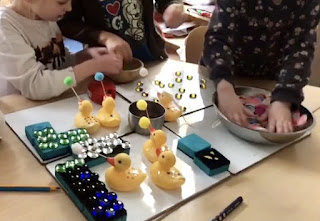
This post will identify some of the features of the PYP that allow us to make transdisciplinary connections. I will then offer highlights of a recent unit of inquiry in Kindergarten.  Transdisciplinarity broadens and deepens learning opportunities about significant and connected ideas. It adds more possibilities to an inquiry as concepts are uncovered and shared meaning is made, rather than added content to cover. In this way, transdisciplinary learning allows children more choice, voice and ownership in their learning. For more theory about transdisciplinarity please see this page from a website I started (and soon stopped!) It is important to note that transdisciplinary learning can take place inside and outside of the programme of inquiry. Children are so often engaged in transdisciplinary learning in their play and inquiries as they have not been 'schooled' to separate disciplines. This past week, a group of children found broken plastic ducks from water play and decided t...